Animation is on of the most important creative creations of the twenty first century, a visual world of fantasy, where there is no impossible.
The word
animate comes from the Latin verb animare, meaning “to make alive or to fill with breath.” Animation,
by modern definition, “is the rapid display of a sequence of 2-D artwork images or model positions in order to create an illusion of
movement.It's an approach, an aesthetic and an application that informs many aspects of visual culture. Animation is here,there and everywhere ... from feature length films to prime time sit Com's, from television and web cartoons to display functions of new communication technologies., I can confidently say that
it's the new generation of (sign form) of the modern age.


Like every story of success, many in Europe and in the United States claim the writs to it's invention, the history of animation is still being researched, one theory suggests that
the roots go back to the industrial revolution in the 1800s, that contributed to the evolution of press technology, making it possible to add images to news paper contents,
cartoon caricature was introduced, The word can be
traced back to the 17th century, when
Italian artist ( Agostino Carracci ) drew so-called “ritratti caricati”, absurd portraits and figures, literally translated: overloaded portraits, mocking societies interests and news headlines.


I remember, at school with friends, we tryed something similar to this flip book ( kineograph ) but simpler ...

Early attempts of animation came in several individual efforts, Many devices and gadgets which bore strange names as: Thaumatrope, Stroboscope, Phenakistoscope, The Wheel of Life, Kinetograph and many others.
In 1825 Dr. John Ayrton Paris created the ( Thaumatrope ): a card disc with a picture of a bird on one side and a birdcage on the other, when the disc was twirled by two strings attached to opposite edges.
The viewer's eye retained the image of one side as the other side was revealed ...
The result was that the two images became as one : the bird appeared to be in the cage

In 1832, the Belgian physicist Joseph Plateau invented the ( Phenakistoscope ): a revolving paper disc which has a number of figurs pictured in different stges of movement spaced around it, when viewed through a mirror, thy appear to be one moving image.
 Plateau's invention inspired many other devices
, in the last quarter of the 19th century, when the inventions of the Kinematoscope by Coleman Sellers of Philadelphia and
William E. Lincoln’s Zoetrope were great advances leading to the motion picture.
 Then came Emile Reynaud in 1892 with his Theatra Optique
 The big breakthrough came in
March
1895,
when Auguste and Louis Lumiere successfully projected live action motion pictures onto a screen with their ( Cinematograph ) in Paris then again at Marlborough Hall in London.
The Lumiere brothers are
regarded the earliest film makers,
who managed to combine the complex organization of a camera with that of a projector.At this stage, there was little distinction in the public eye between live action film and animated drawings, since the essence of both was movement 

The first specialisation strands that emerged whent in
three directions:
*
Straight Cinema, also referred to as ( live-action film ).
*
Animated films and cartoons,
using the ( stop-motion technique: of photographing each stage of movement separately).
*
Trick photography: which is a combination of both, creating live-action film with animated optical effects added.
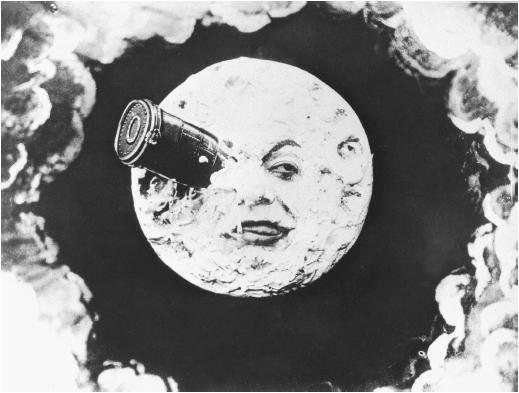
Cinematigraph became popular when it's value was recognised as an entertainment medium, in 1902 the film ( VOYAGE TO THE MOON ) starring Georges Melies was released.
 The British
Arthur
Melbourne Cooper produces the worlds first animated commercial in 1899, a stop motion film
of moving matchsticks titled ( Match Appeal )In 1906 James Stuart Blackton produces his film ( Humorous Phases of Funny Faces ), being the first to combined live, trick and animated techniques. Blacktons second film ( The Haunted Hotel ) released in 1907, included new effects and tricks, was imported by the french, watched by 5000 Parisian audience.


During the first two decades of the twentieth century, animators quickly learned new techniques to exploit this medium, creating memorable cartoon characters like
Winsor McCay's ( Little Nemo in Slumberland ) 1911 and ( Gertie the Dinosaur ) 1914, McCay
is also credited for being the first to make an animated documentary ( The Sinking of the Lusitania ) 1915.
At this stage , the USA and European animation started to develop apart, with
the USA winning the international race to shape this new time consuming, costly medium, their creativity overshadowed
the Europeans concepts based on local characters and simple technologies.
Felix the Cat 1919 cartoon, similar to news paper cartoon caricature,
the first cartoon to introduces visual mocking punning gags, which appealed to intellectual audiences, as did cartoon character (
Betty Boop 1932, a sex symbol tailored to image of Hollywood stars

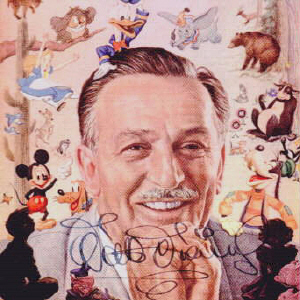
 Walt Disney ... the golden age of American cartoon
the most popular animation studio up to date, starting out in the late 1920's creating characters that have stud the test of time, becoming icons all age groups relate to: Mickey Mouse, Pluto, Goofy and Donald Duck.


 Animation and the digital age
Working as a TV Graphic animator, I've witnessed how accessible the development of digital technologies has made animation, not easy to create and not hard to learn at the same time,if a person has the passion for it. With a click of the mouse, the limits are sky high when it comes to the ability to experiment, change and remake the design, adding to the accidents that tern out to be a pleasant surprise.
With animation, I managed to tern dull and dry subjects with contents that lack images or video rushes, into interesting eye catching visuals that manage to attract attention. It's a magical world of constant disciplined change.
The many applications where animation came in as a solution include* Media
* Television
* Advertising
* Music
* Web Design
* Games
* Innovative Marketing
* Conferences
* Communication
* Documentaries
* Business Presentations
* Military services
* Education
* Crime investigations
* Medical observation
* Whether forecasts
* Maps/ whey finding
TV Graphics

Whether forecasts
 What does the future hold for us in animation
I really cannot say ...
I hope it remains a blessing, not turns into a curse, the bad side affect to the digital privileges we are enjoying, such as Games, Face book, My space and other virtual society communities, are keeping us in touch, but still lonely, becoming harder and less human to each other, because at the end of the day, we are all alone facing a screen.
My favorite animated cartoon ...
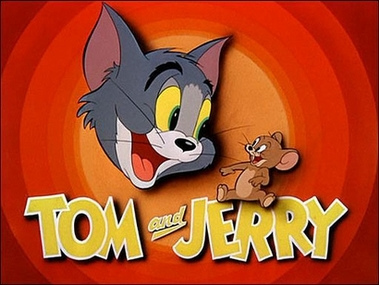
Tom and JerryI love the chase, the art of war between the two, but we all know that they can't live without each other, it's a love hate equation, often used as a metaphor ....
Those two ... are like Tom and Jerry ; )











 Posts


