
11 Mar 2009


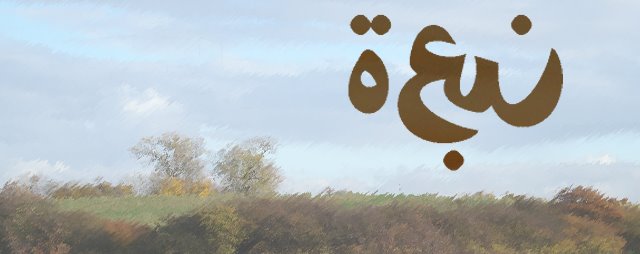
Business for Design Nab3a Branding Logo
To build my logo design as a form, an icon which is also a word, I decided to dismantle the Arabic calligraphic letters, and use a neutral unit or motif, I've found that the letters ( C c , U u , D AND 3 ) in typography have allot of potential in creating calligraphy.
I used The letter C like Abric or piece of Lego, on it's own it has no meaning or effect, but it's position and relation with the next one and the one after will create a form, an icon for other cultures, and a word in Arabic for my company.
It represents me to I go with Arabic


I used The letter C like Abric or piece of Lego, on it's own it has no meaning or effect, but it's position and relation with the next one and the one after will create a form, an icon for other cultures, and a word in Arabic for my company.
It represents me to I go with Arabic


Business for Design .. Nab3a Brand
I chose Nab'a as a name for my compani
In Arabic it's the feminine of the source
my company is the source of hand made arts
I have a soft spot for this name , because it's also the name of my late aunt who passed away at the age of four,so I want her to live through her name brought back ti life.


In Arabic it's the feminine of the source
my company is the source of hand made arts
I have a soft spot for this name , because it's also the name of my late aunt who passed away at the age of four,so I want her to live through her name brought back ti life.


Business for Design Branding Theam
When I first started my companies identity theme, why do I want my company to carry this mane ?. I went down two paths:
Nab'a:
In Arabic it's the feminine of the source
my company is the source of hand made arts
Deim:
In Arabic it means the land that is cultivated, then wights rain, there's no water source near by.
The meaning is in he principle,of making the effort, working hard, going all the whey and having faith that it will bear fruit.

Nab'a:
In Arabic it's the feminine of the source
my company is the source of hand made arts
Deim:
In Arabic it means the land that is cultivated, then wights rain, there's no water source near by.
The meaning is in he principle,of making the effort, working hard, going all the whey and having faith that it will bear fruit.

9 Mar 2009
D.P.B : Researching pop up cardboard theatre
Before kids had Mp3 players and PlayStations, they found many of their adventures in books. Now that some of the consumerism of the 21st century has been stripped away by the Credit Crunch, books are still here to enrich children’s lives: inexpensive, imagination-firing brain food and a doddle to wrap!
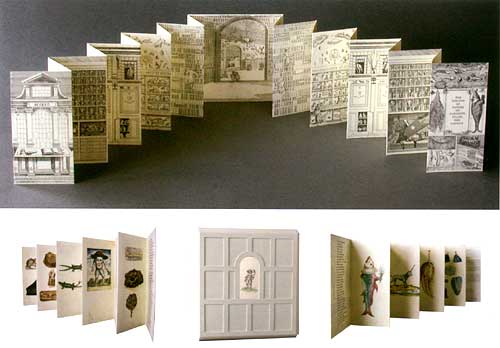
By exploring more into the world of (pop up/ cut out) interactive books for children, it has shown me how effective the different heights and color palettes of the layers can add to the attraction to the final product of a cut out theatrical scene


By exploring more into the world of (pop up/ cut out) interactive books for children, it has shown me how effective the different heights and color palettes of the layers can add to the attraction to the final product of a cut out theatrical scene


6 Mar 2009
Crtical Debate in Design: Product packaging

History of Packaging
The earliest packaging solutions appeared at least 9,000 years ago, when people began using baskets, bowls and animal hides to wrap and contain their goods. Soon afterward came the invention of clay pots, which, when buried in the soil, afforded improved product storage.
Paper may be the oldest form of what today is referred to as "flexible packaging." Sheets of treated mulberry bark were used by the Chinese to wrap foods as early as the First or Second century B.C. During the next fifteen hundred years, the paper_making technique was refined and transported to the Middle East, then Europe and finally into the United Kingdom in 1310.

The first commercial cardboard box was produced in England in 1817, more than two hundred years after the Chinese invented cardboard. Corrugated paper appeared in the 1850s; about 1900, shipping cartons of faced corrugated paperboard began to replace self_made wooden crates and boxes used for trade.
Corrugated (also called pleated) paper was patented in England in 1856, and used as a liner for tall hats, but corrugated boxboard would not be patented and used as a shipping material until December 20, 1871
Over the millennia, people gradually discovered new packaging technologies - such as glass, kerchiefs, sacks, boxes and barrels.

The function of packaging has changed markedly over the years. In the beginning, it fulfilled two main functions - transportation and storage. The ordinary paper bag, among the oldest and most enduring of all packages, continues to fulfil the same straightforward purpose - in helping consumers carry goods home from the marketplace. As with any package, the effectiveness of the paper bag stems from three main characteristics: It is made from long-lasting material, helps protect contents in transit and saves space.

Modern retailing practices demand increasingly sophisticated packaging solutions. Product manufacturers need value-added packaging that promotes sales by providing pleasing, eye-catching aesthetics and important consumer information. Packaging also plays an essential role in product branding – by communicating ideas, values, and life styles. Packaging is essential to differentiating products and making them unique.
The Growing Importance of Design
Creative design in product packaging became a major commercial art during the 20th Century. The modern supermarket emerged in the United States in the years following World War Two and quickly spread to other continents. By offering a wide selection of brands and self-service, it fostered packaging that helped to sell the product by combining product promotion with consumer information. The first literature devoted to product packaging, The Modern Packaging Encyclopedia, 1946-47, was published just before mid-century, and the number of packaging exhibitions and competitions has grown steadily ever since.

The Birth of Branding
During the 19th Century, as producers encountered growing competition in selling their wares, some began to differentiate their products in order to attract customer attention and build loyalty. The art of branding was born.
One rather recent development in packaging is the labeling of the product with the company name and contents information. Official trademarks were pioneered in 1866 by Smith Brothers for their cough drops marketed in large glass jars. This was a new idea _ using the package to "brand" a product for the benefit of the consumer. In 1870, the first registered U.S. trademark was awarded to the Eagle_Arwill Chemical Paint Company.


Convenience as a Competitive Advantage
While environmental protection remains a major focus of product packaging, customer convenience became increasingly important from the 1990s onward. Research shows that two-thirds of all purchasing decisions are made at the point of sale and that customers willingly pay more for added convenience.
Future Packaging Trends
In the future, sophisticated packaging will help products stand out through the use of shape, color, surface and texture, it will be multifunctional, convenient and entertaining. It will keep products warm or cold, change colors and shapes and offer useful enclosures. It will be recyclable, edible, refillable and re-useable - as a toy or a storage box, for instance.
Innovative packaging design is a powerful instrument for positioning products, differentiating them and increasing their value to consumers. It will remain indispensable to marketing high-quality consumer goods.
On 13 March 2008, the UK Chancellor of the Exchequer, Alistair Darling, announced the 2008 Budget, which says it includes “[...] measures aimed at tackling climate change.”
nitially, encouraged that the government is a least listening to the public acknowledgment, that action needs to be taken to tackle climate change, One of the budget actions, to [potentially] charge for plastic carrier bags,the Daily Mail Newspaper did launch a BAN THE BAG campaign [pictured above], so maybe just maybe such media campaigns are our only hope in helping the public see the reality.
he Netherlands and Sweden top for environmental waste management, with 20 per cent of waste being recycled and the remaining incinerated to provide energy that is pumped back into the national grid. Denmark and Germany are close with an impressive 35 per cent recycling rate and 65 per cent burned for energy.
In contrast is the UK, with a 27 per cent recycling rate and 10 per cent burned to create energy, with over 60 per cent (or 16.9 million tonnes) going to landfill sites. Considering methane – a by-product of decomposing waste at landfill sites – is widely regarded as a bigger contributor to greenhouse gases than CO2, it’s a shocking indicator of how far behind the UK is in terms of waste management.

From the most minimal – like greaseproof paper covering speciality cheeses in Waitrose – to complex structural packaging to protect laptops and peripherals from damage and static charges, packaging serves the same purpose (known as the 3 Ps): to Protect, Preserve and Promote the product. Now added pressure from environmental lobbyists and eco-savvy consumers means that packaging must protect more than just its contents – it must do its bit for the planet too.
Of all the design disciplines, packaging design has the worst environmental reputation. Whether it’s an excess of card inserts, heat-sealed blister packs or layers of plastic wrapping, the designer’s desire to get their clients’ products to stand out on supermarket shelves results in swathes of needless waste.
the blame doesn’t lie squarely at the door of the designer. Design groups are absolutely dedicated to sustainability, but they make natural scapegoats.
Unfortunately, this masks a far bigger underlying problem: that the process of waste management – especially in the UK – is a far bigger contributor to environmental damage.
packaging designers can do their bit of responsibility to the environment. Packaging material and manufacturing innovations make it easier now than ever before to switch to a more sustainable model of production. Whether it’s recycled or FSC-accredited paper for labelling, vegetable inks for print or cellulose-based plastics, there’s an abundance of options available for the environmentally conscious packaging designer.
There is no hard and fast rule to developing greener packaging; it tends to be a symbiosis between designer, manufacturer and client. Daylesford Organics – a company dedicated to providing fresh, organic produce direct from its dairy in Gloucestershire – insisted from the start of the design process that the packaging be as environmentally friendly as possible. Together with EcoLean and Teresa Roviras, its signature milk jug packaging is more energy efficient to manufacture, 100 per cent recyclable, and retains a premium feel. The resulting design netted Roviras her second D&AD Silver Award and yellow pencil in 2006.

Another design started with EcoLean, a Swedish company specialising in 100 per cent recyclable packaging. The EcoLean jug is made from calcium carbonate (chalk) and a polymer to bind the chalk together to make a strong yet supple sheet plastic. The manufacture process is much more energy efficient, cutting CO2, and the end product weighs far less than rival cartons or bottles, making distribution more environmentally sound.


manufacturers are reaping the benefits of a sustainable source of raw materials. Large packaging manufacturers are increasingly working to attain Government accreditations from the Forestry Stewardship Council (FSC) and ISO 14001. This means that many mainstream products now use packaging from a sustainable source, or use printers that work hard to improve energy efficiency. For example, Benson Box Ltd and Nampak cartons are two FSC-accredited box-based packaging manufacturers that supply packaging for Nestlé cereals, Easter egg cartons and many other Fast Moving Consumer Goods.


2 Mar 2009
D.P.B: Visit to an Assyrian Palace : Book content
The Assyrian
The great god Ashur
The Kings of Assyria are his representatives on earth
Ashur the god gave his name to the city of Ashur and
the Assyria Empire

The Assyrian Empire existed 2,800 years ago
First hints came in the Bible .. stories about Mesopotamia .. the land between the two rivers the Tigris and the Euphrates .. known today as Iraq
In Ashur and other cities like Nimrud and Nineveh .. the kings built their palaces
It seemed to have been an ambition or a religious duty of every Assyrian king to build a new palace alongside a temple
the palace was decorated with astonishing carved stone walls full of a variety of picture galleries having hundreds of scenes from
the kings life
at war .. out hunting ..worshiping gods
and hosting his guests .. nobles ..
court offcials .. the army .. and herim
with entertainment at the palace
The Assyrians
Took their common language .. arts and Cuneiform writing from the Sumerians
Making some changes through time
And turned it into a new language
The Assyrians were a nation of warriors Organized .. disciplined and hungry for power Their history is one of kings and slaves
Wars and conquests .. capturing enemy towns
Led by their hero kings
The Assyrians are always victorious
The Bible mentions names of kings like Sennacherib .. who had come from a land called Assyria to invade Palestine
The Assyrian capital had been Nineveh
We can still see some old parts (the city ruins) Today beside the river Tigris opposite the Modern city of Mosul
In northern Iraq

The winged monsters:
The gates of Assyrian palaces were guarded by gigantic monsters, with the heads of bearded men with horns, their bodies were of winged lions or bulls, the Assyrians believed that those winged monsters frightened away evil spirits which might harm the king.

Royal Banquit:
King Ashurbanipal celebrating his victory over his enemy ( the Elamites ), with his Queen in the royal garden, cerounde by gests, servents and musicians.

The hero king
tells us about the spiritual heroic adventures .. hunting a lion ..the most dangerous animal symbol of bravery
knowing that his mortality is achieved through being rememberd as a hero


Assyrian Book Cover

Assyrian City Final Cutout

Assyrian Palace Final Cutout

Assyrian King

Gilgamesh:
The hero-king of Uruk, his story is told on eleven clay tablets in the library of the Assyrian king Ashurbanipal,7th century B.C. The story tells us about the spiritual heroic Gilgamesh, the powerful king who is part divine and part human.
Through his adventures, Gilgamesh Seeks the secret of eternal life, he finally returning to Uruk a much wiser man, knowing that his mortality is achieved through other people remembering him as a hero.
Info on the back of the cut out:
Gilgamesh .. a hero of all times .. holds a lion in his hand, the most dangerous animal .. a symbol of bravery and a serpent in the other hand .. a symbol of eternity

Winged Angel
Protects the King from evil spirits

Harpist
Plays the Harp instrument for the King and his guests

Army Officer
Reporting to the king the latest army victory over the enemy

more will follow
The great god Ashur
The Kings of Assyria are his representatives on earth
Ashur the god gave his name to the city of Ashur and
the Assyria Empire
The Assyrian Empire existed 2,800 years ago
First hints came in the Bible .. stories about Mesopotamia .. the land between the two rivers the Tigris and the Euphrates .. known today as Iraq
In Ashur and other cities like Nimrud and Nineveh .. the kings built their palaces
It seemed to have been an ambition or a religious duty of every Assyrian king to build a new palace alongside a temple
the palace was decorated with astonishing carved stone walls full of a variety of picture galleries having hundreds of scenes from
the kings life
at war .. out hunting ..worshiping gods
and hosting his guests .. nobles ..
court offcials .. the army .. and herim
with entertainment at the palace
The Assyrians
Took their common language .. arts and Cuneiform writing from the Sumerians
Making some changes through time
And turned it into a new language
The Assyrians were a nation of warriors Organized .. disciplined and hungry for power Their history is one of kings and slaves
Wars and conquests .. capturing enemy towns
Led by their hero kings
The Assyrians are always victorious
The Bible mentions names of kings like Sennacherib .. who had come from a land called Assyria to invade Palestine
The Assyrian capital had been Nineveh
We can still see some old parts (the city ruins) Today beside the river Tigris opposite the Modern city of Mosul
In northern Iraq

The winged monsters:
The gates of Assyrian palaces were guarded by gigantic monsters, with the heads of bearded men with horns, their bodies were of winged lions or bulls, the Assyrians believed that those winged monsters frightened away evil spirits which might harm the king.
Royal Banquit:
King Ashurbanipal celebrating his victory over his enemy ( the Elamites ), with his Queen in the royal garden, cerounde by gests, servents and musicians.
The hero king
tells us about the spiritual heroic adventures .. hunting a lion ..the most dangerous animal symbol of bravery
knowing that his mortality is achieved through being rememberd as a hero


Assyrian Book Cover
Assyrian City Final Cutout
Assyrian Palace Final Cutout
Assyrian King
Gilgamesh:
The hero-king of Uruk, his story is told on eleven clay tablets in the library of the Assyrian king Ashurbanipal,7th century B.C. The story tells us about the spiritual heroic Gilgamesh, the powerful king who is part divine and part human.
Through his adventures, Gilgamesh Seeks the secret of eternal life, he finally returning to Uruk a much wiser man, knowing that his mortality is achieved through other people remembering him as a hero.
Info on the back of the cut out:
Gilgamesh .. a hero of all times .. holds a lion in his hand, the most dangerous animal .. a symbol of bravery and a serpent in the other hand .. a symbol of eternity

Winged Angel
Protects the King from evil spirits

Harpist
Plays the Harp instrument for the King and his guests
Army Officer
Reporting to the king the latest army victory over the enemy
more will follow
Subscribe to:
Posts (Atom)

 Posts
Posts

